


Silkscreen Printing
Stencil / Silkscreen Printing Principle
Screen Printing (Silkscreen Printing)
Screen printing, also known as Silkscreen Printing or Stencil Printing, is a printing method in which ink is transferred through a mesh screen onto a substrate. The image is created by blocking selected areas of the screen, allowing ink to pass only through the open mesh areas corresponding to the desired design.
Originally developed from traditional stencil printing techniques, screen printing has evolved into a versatile printing process widely used for textiles, packaging, labels, electronics, signage, glass, ceramics, and industrial products.
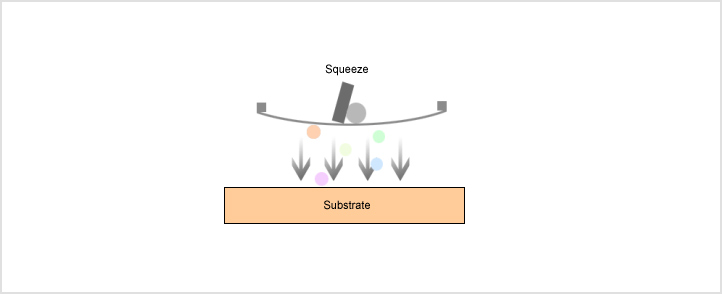
Silkscreen Printing Principle
Unlike offset and gravure printing, screen printing transfers ink through a mesh screen directly onto the substrate.
A stencil is created on the screen surface using a photosensitive emulsion. The image areas remain open while non-image areas are blocked.
During printing, ink is placed on top of the screen and a squeegee applies pressure, forcing the ink through the open mesh onto the substrate positioned below.
Because screen printing deposits a relatively thick ink layer, it is capable of producing vibrant colors, high opacity, and special visual effects that are difficult to achieve with other printing methods.
How Silkscreen Printing Works
1. Screen Preparation
A fine mesh screen is stretched tightly over a frame and coated with a photosensitive emulsion.
The desired image is then exposed onto the screen, creating:
- Open mesh areas (image areas) where ink can pass through.
- Blocked areas (non-image areas) where ink is prevented from passing.
2. Ink Application
Printing ink is deposited on the top surface of the screen.
The ink remains above the mesh until pressure is applied by the squeegee.
3. Squeegee Transfer
The Squeegee is moved across the screen surface under controlled pressure.
As the squeegee presses against the mesh:
- The screen makes temporary contact with the substrate.
- Ink is forced through the open mesh openings.
- The image is transferred directly onto the substrate.
After the squeegee passes, the screen lifts away from the substrate, leaving a clean printed image.