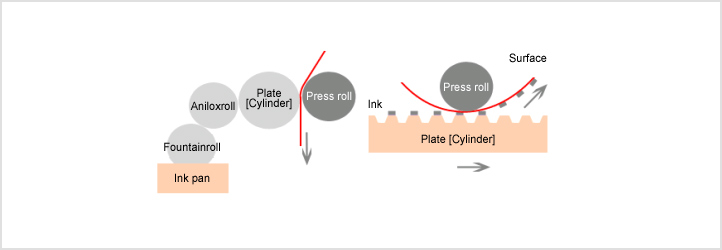
Flexographic printing, commonly known as Flexo Printing, is a modern relief printing process in which ink is transferred from raised image areas directly onto the substrate. The printing plate contains embossed (raised) image elements that receive ink and transfer it to the printing surface. Originally derived from traditional letterpress printing, flexography has evolved into one […]
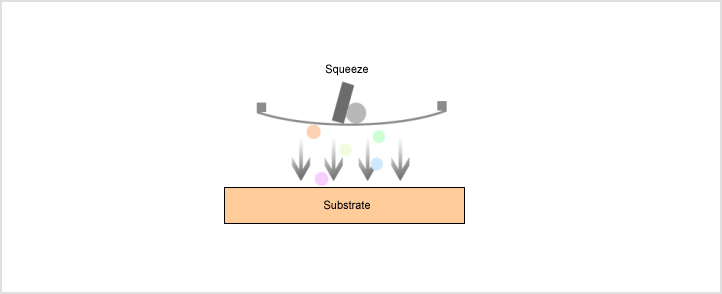
Screen Printing (Silkscreen Printing) Screen printing, also known as Silkscreen Printing or Stencil Printing, is a printing method in which ink is transferred through a mesh screen onto a substrate. The image is created by blocking selected areas of the screen, allowing ink to pass only through the open mesh areas corresponding to the desired […]
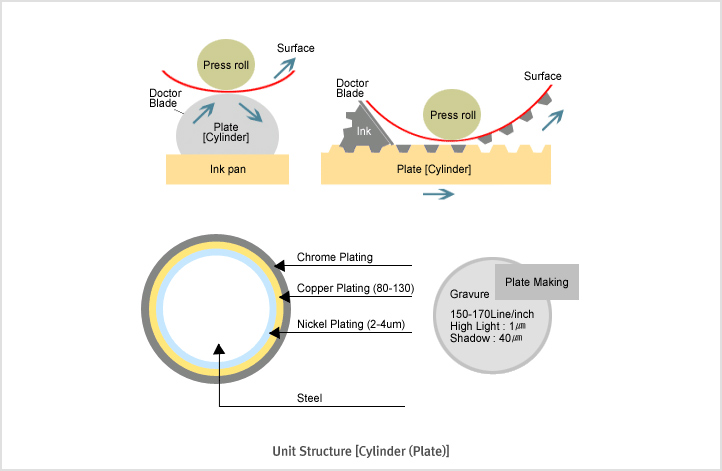
Gravure printing derives its name from the word “engrave”, referring to the engraved cells that are created on the surface of a metal printing cylinder. Unlike relief or offset printing, gravure transfers ink from thousands of microscopic recessed cells directly onto the substrate. Originally developed from Heliogravure technology in 1897, gravure printing has become one […]
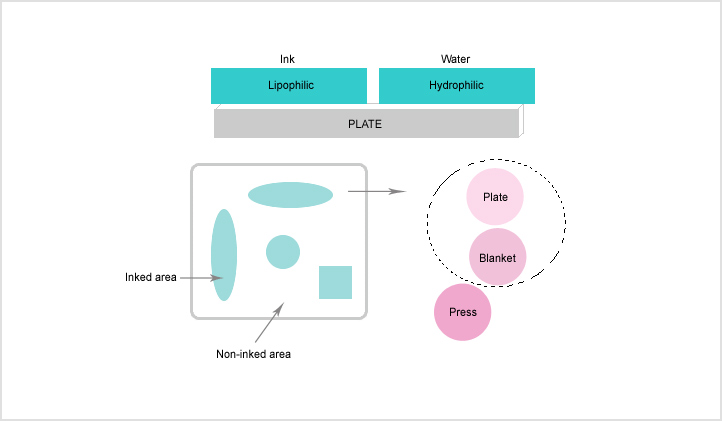
Offset printing is based on the physical and chemical repulsion between ink and water. The printing plate contains two distinct areas: Image areas (ink-receptive areas): These areas are oleophilic (lipophilic), meaning they attract ink and repel water. Non-image areas (water-receptive areas): These areas are hydrophilic, meaning they attract water and repel ink. During printing, a […]
History of Printing Ink Printing ink was invented in China along with the discovery of printing technology in ancient China. Chinese ink was not the same liquid consistency as it is today but, instead, was more of a writing stick which foreigners call India ink. This was developed in 220~419 A.D. during the Jin Dynasty […]